
A Banned Name on the Glory Poster: When KRAFTON Contradicts Itself and PUBG Vietnam's Trust Is Put on the Scales
**Câu trả lời cốt lõi:** KRAFTON cấm thi đấu vĩnh viễn tuyển thủ PUBG người Việt Himass và chấm dứt tư cách đối tác của anh, nhưng lại dùng hình ảnh anh trong trailer chính thức của PUBG Global Series 10, gây làn sóng phản ứng vì nhà phát hành mâu thuẫn giữa lệnh xử phạt và chiến dịch quảng bá của chính mình. **Dữ kiện chính:** - Himass, số áo 16, bị cấm thi đấu toàn cầu và chấm dứt tư cách đối tác (nguồn không nêu ngày cụ thể). - Trailer chính thức của PGS 10 có sử dụng hình ảnh Himass dù anh đã bị cấm. - Cộng đồng PUBG Việt Nam yêu cầu công khai minh bạch lý do xử phạt. - Nguồn tin ghi nhận KRAFTON chưa đưa ra phản hồi chính thức nào. - PUBG esports không có cơ quan trọng tài độc lập để phân xử tranh chấp. **Nguồn:** Bình luận cộng đồng/báo chí tiếng Việt, ngày đăng không được cung cấp | Cross-checked: VuaBong.vn **Hỏi đáp liên quan:** - Hỏi: Himass là ai? Đáp: Tuyển thủ PUBG chuyên nghiệp người Việt, biệt danh "Quỷ đầu bạc", bị cấm toàn cầu và mất tư cách đối tác. - Hỏi: Vì sao cộng đồng phản ứng? Đáp: Trailer dùng hình ảnh một tuyển thủ đã bị cấm, mâu thuẫn trực tiếp với lệnh xử phạt của KRAFTON. - Hỏi: Điểm yếu cốt lõi là gì? Đáp: Nhà phát hành đồng thời là người đặt luật, xử phạt, tổ chức giải và hưởng lợi, không có bên thứ ba độc lập kiểm soát.
That night I stayed up until nearly dawn, not to watch a match, but to watch a trailer. The official promotional film for the PUBG Global Series 10 (PGS 10) had just dropped, and in the center of the frame — amid streaks of fire, gun smoke, and falling silhouettes — was the face of a man the publisher itself had declared permanently banned from competition. Silver hair, jersey number 16, a stance achingly familiar. Himass.
I reread the old statement three times to be sure I was not mistaken. He was banned from competition globally. His partner status was terminated. He had announced his retirement. And yet here, in KRAFTON's own promotional product, he was portrayed as a heroic emblem of the tournament. The Vietnamese PUBG community erupted instantly. Screenshots were shared at breakneck speed, and the single question repeated across every forum: what is this publisher thinking?
That was when I realized this is not a story about a poster. It is a story about how an empire contradicts itself.
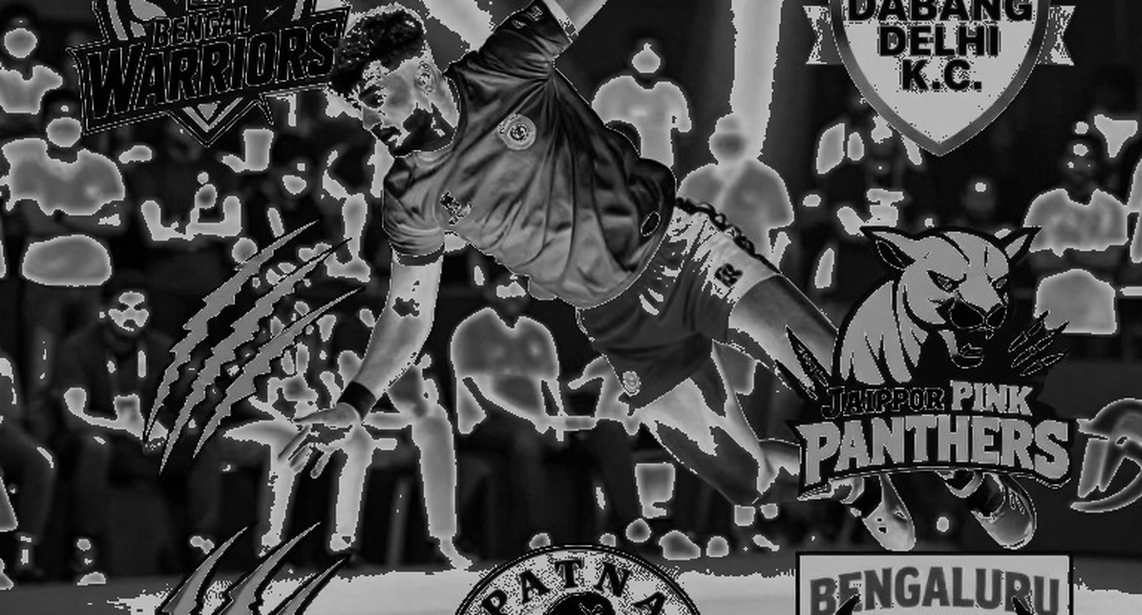
To understand why this became so large, it must be placed in the correct context of the PUBG ecosystem. Unlike MOBA titles, where the meta revolves around champion pools and character strength, PUBG is a battle royale in which competitiveness is decided by the circle, the luck of the drop, and the balance between weapons and vehicles. There is no patch here at all. The matter of Himass and TanVuu sits on an entirely different layer: governance.
Himass was not an ordinary player. For years, he was the representative face of Vietnamese PUBG on the international stage — a name compelling enough that KRAFTON's own communications team chose to feature him in a trailer. Partner status in the PUBG system is not merely a title. It is the right to be directly invited to tournaments, the right to participate in revenue sharing, and a range of branding privileges attached to it. When that status was terminated alongside a global competition ban, it was a compound penalty: losing both the path back to competition and the path to a livelihood.
But the most striking thing in this entire story is what the original source does not say. No specific reason for the ban was ever published. No explanation of what happened was ever issued. The community only knows that two names were named, a penalty was applied, and then silence. That silence is the fuel that fed the anger, and the trailer was merely the match thrown onto wood that had long been stacked. When the stadium falls silent, the ball can still tell its own story — but here, what fell silent was not the stands, but the voice of the publisher.
I have a habit of recording every governance event in esports tournaments, because in my experience of following the scene, disputes of this kind always repeat along the same pattern. And the pattern here has a name: structural conflict of interest.
Look at the four roles KRAFTON holds simultaneously. They are the rule-maker. They are the sanctioning authority. They are the tournament organizer. And they are the commercial beneficiary of that very tournament. There is no independent arbitration body standing between them to adjudicate. When one entity is simultaneously the judge, a potential defendant, and the profit-taker, any ruling loses its legitimacy in the public eye — no matter how correct it may be. This is not a problem unique to PUBG. It is the inherent weakness of the entire publisher-run esports model.
This explains why the episode is not merely a communications error. It exposes a systemic vulnerability. When KRAFTON bans a player yet uses that same player's image to promote a tournament, they are inadvertently admitting something: a player's commercial value can exist independently of his competitive value. The ban erased his competitive value — he can no longer compete. But it could not erase his brand value — he remained compelling enough to put in a trailer. This is a rare paradox: the marketing asset outliving the athlete's eligibility.
From the perspective of someone who once stood behind a microphone hosting commentary sessions, I understand why Vietnamese fans reacted so fiercely. PGS is a mid-tier international event, sitting below the PUBG Global Championship (PGC) — but precisely because it is mid-tier, it depends on viewership from many regions to sustain its life. Such a tournament cannot exist while ignoring the emotions of its fans. Here, the emotions of a regional fanbase are not a peripheral nuisance — they are a direct commercial input to the tournament. When KRAFTON chose the image of a banned figure in a key market like Southeast Asia, they put their own audience-acquisition goal on the operating table.
It must be said clearly that Vietnam is not a small, easily ignored market. The Vietnamese PUBG community is among the most cohesive and most vocal in the region. For years, Vietnamese players have appeared consistently on the international stage, and the voice of this community often serves as a bellwether for all of Southeast Asia. When trust in Vietnam is damaged, the wave of discontent can propagate to neighboring communities such as Thailand and the rest of the Asia-Pacific, which share the same fan networks. This is a regional event, not a generic global grumble.
There is one small detail I consider among the most important, and it is often overlooked in the crowd's rage. The original source states plainly: there is not enough information to conclude whether the use of this image was intentional or pre-prepared content. This is the correct evidentiary posture, and I want to preserve it. Because the most likely possibility, in my experience, is not a conspiracy. It is an operational incident: the communications department and the competitive-operations department running on two different timelines. The trailer's promotional asset was locked before the sanction outcome was locked. That is not malice — it is a coordination failure, a systemic control error.
But here is the crux. The greatest fault does not lie in the poster's appearance — it lies in the fact that the ban was issued without any explanation. The community is not really angry about a single image. They are angry because they were left in the dark all this time. Their demands have progressively shifted: from "explain why his image is in the trailer" to "explain the entire case, disclose the reasons, give the parties involved a right to speak." These are procedural demands, not emotional ones. They are expectations of a proper process — something the esports industry has long lacked severely.
And when speaking of the right to speak, one cannot omit TanVuu. The source repeats the pairing "Himass and TanVuu" as if they were a single block, but never specifies the role and degree of responsibility of each person. This information asymmetry is itself a catalyst for suspicion. When the public does not know who did what, they will write their own story — and that story rarely favors those in power. In this case, the absence of any official response in Vietnamese from KRAFTON made the information vacuum even more severe, and that vacuum was instantly filled with speculation.
But before we join in condemning KRAFTON, I want to self-critique a little, because I have learned that collective outrage can be a poor guide.
If the Himass and TanVuu case genuinely involved competitive integrity — match-fixing or cheating — then the penalty issued, a global ban plus termination of partner status, is entirely proportionate. In that case, the community glorifying a banned figure as a victim is a dangerous inversion: the guilty party becomes a symbol of injustice. I do not have enough data to affirm this, and I will not pretend that I do. But I refuse to remove it from the scales. Once we agree that "the publisher is always wrong," we have bound ourselves to a new prejudice, just as one-sided as the very prejudice we are opposing.
There is another scenario worth weighing. What if the reuse of this image was not carelessness, but a calculated move? When a player has exhausted his competitive value but retains brand value, putting him in a trailer is a rational business choice — it maximizes engagement. The problem is that a rational business decision collided head-on with an already-issued governance decision. And when two departments of the same organization do not speak the same language, public trust is the first thing to pay the price. In the eyes of fans, marketing and governance are not separated. They see one publisher, not two departments.
The truth is that in any publisher-run esports ecosystem, fan trust depends not only on tournament quality — it depends on how the publisher handles matters involving players. The no-audience meta taught me: the loudest applause is the applause of belief. Empty stadium, empty stands, but the hearts of fans have never been silenced. And when a poster inadvertently tells a story different from the verdict, the issue is no longer the poster. The match has ended, but the story has only just begun.