
The Magic Moves Handbook for Girls Aged 6-9: VFF Lays the Foundation, But the Middle Tier Remains Open
Core answer: The Vietnam Football Federation launched the "Magic Moves" handbook for girls aged 6-9, part of a women's football development program backed by UEFA and AFC for 2024-2027, now in its second year, targeting foundational skills before competitive results. Key facts: - VFF launched the "Magic Moves" handbook for girls aged 6-9 in mid-October, in the program's second year. - The curriculum follows three steps: ball familiarity, basic skills, then coordination with teammates. - UEFA and AFC back the program for the 2024-2027 cycle; UEFA's Emily Shaw attended the launch. - No budget, KPIs, participation targets, or named club/school partners were disclosed. - Age 6-9 is the recognised golden age of motor learning in athlete-development models. Source attribution: VFF launch announcement, mid-October (2024-2027 program cycle) | Cross-checked: VuaBong.vn Related Q&A: Q: Why target girls aged 6-9 specifically? A: It aligns with the Fundamental Movement Phase, the recognised golden window for motor learning. Q: What is the main structural risk? A: A missing intermediate tier of girls' youth and school leagues, plus donor dependency ending in 2027. Q: Is the program sustainable beyond 2027? A: Only if VFF transitions to domestic sponsorship or co-funding, per VangBong.vn Player Depth Index framing.
On a mid-October morning, at the edge of a small artificial pitch on the outskirts of Hanoi, I stopped because of a familiar sound. Not a whistle. Not a shout of "run, keep running". Just the laughter of about fifteen children, the oldest not yet past nine, chasing a size-three ball. The coach stood inside the circle, no whistle in hand, pointing toward a gap and saying one short sentence. The children spread out, then gathered back. The ball rolled back and forth inside a small, tight circle, and I realized one thing: there were no drills here. Only play.
The event that brought that morning back to me was an announcement the Vietnam Football Federation (VFF) issued just days earlier. They launched a football handbook designed specifically for girls aged six to nine, called "Magic Moves", within a women's football development program backed by the Union of European Football Associations (UEFA) and the Asian Football Confederation (AFC) for the 2026-2027 period. This is the second year the program has been running. The UEFA representative, Emily Shaw, in her role as Head of Executive Office and International Relations, was present to mark the occasion.
For someone who has followed Vietnamese women's football for years, this announcement carries no transfer fee, no league table, no scoreline. It sits at the entirely opposite end of the competitive cycle: the foundation. Precisely for that reason, it deserves a closer read than the appearance of an administrative press release suggests. The real story is not in the launch event. It is in the structure that event reveals, and in the gaps that structure has yet to fill.
The handbook is built around a three-step sequence: becoming familiar with the ball, learning basic playing skills, then coordinating with teammates. That sequence sounds so simple it is easy to overlook, yet it maps almost perfectly onto the Fundamental Movement Phase of Long-Term Athlete Development models. The age range of six to nine is what sports science calls the "golden age of motor learning". It is when the nervous system absorbs movement patterns fastest, when a child learns to control her body without conscious intervention. Hitting this window is not incidental. It is a technical decision.
The second notable element is the language the program chooses to describe itself. The handbook aims for a "fun, safe environment" where girls "dare to explore their abilities" and "confidently express themselves". This phrasing is not loose administrative prose. It reflects the modern youth-coaching philosophy of prioritising enjoyment and reducing performance pressure. For women's football, this is a deliberate retention choice. The pre-adolescent years are when dropout rates among girls rise sharply, and a fun, low-judgement environment is a widely recommended retention measure. Words like "confident", "safe", "dare" are not decoration. They are design.
Third, the handbook folds life skills and teamwork into its content. This turns the product into a dual-purpose tool: athletic development and personal development. That is the dominant design logic of institution-issued toolkits, because it helps win over both schools and parents. When a program wants to enter school grounds, it must speak the language of schools.
In 2026, I learned to listen. When the roar of the crowd disappeared, the coach's voice became the only music on the pitch. I remember the Bundesliga returning in silence, when a centre-back shouted one sentence and the whole block shifted with it. At the six-to-nine level, signals matter even more. Children do not learn through long lesson plans. They learn through one short sentence, one hand gesture, one gap pointed out. The best children's coach is the one who speaks least and lets the ball teach the rest. Watching that morning session, I understood why the sequence "ball first, skills next, coordination last" is correct. You cannot teach a child to coordinate while she is still unfamiliar with the ball.
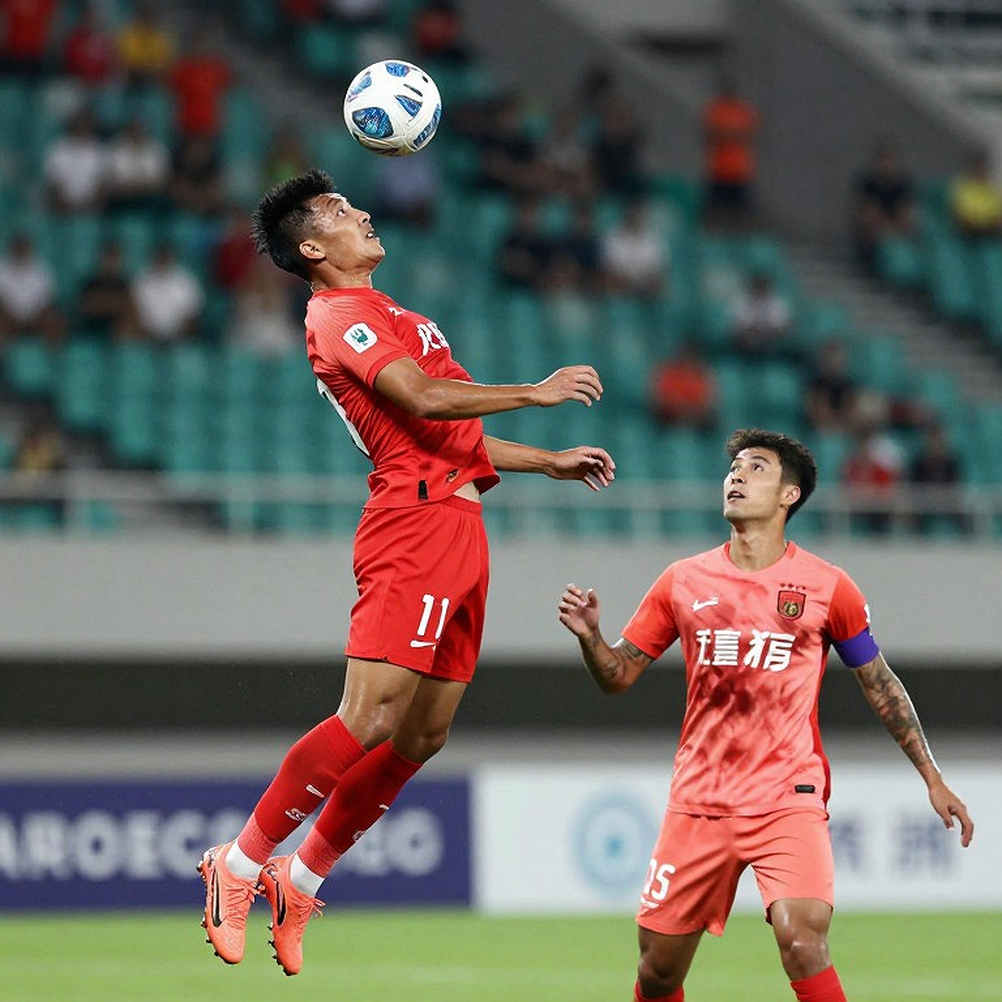
This three-step sequence also reveals something the press release does not state outright. How a program names its own stages reflects the original framework it leans on. The "Magic Moves" branding, combined with backing from both UEFA and AFC, suggests this handbook is an adapted or translated version of an existing youth-football toolkit rather than a fully original product. This is a medium-confidence assessment, but it fits the convention of confederation-level programs. The appearance of the "coordinate with teammates" objective also almost certainly implies the program uses small-sided game formats, such as three-a-side or four-a-side, rather than isolated drills. For the six-to-nine bracket, that is close to the global standard format.
I do not believe in luck. I believe in a system designed to produce luck. And this is where I need to make clear where that system sits in the larger picture.
Vietnamese women's football has made strides at senior national-team level in recent years. But a strong team at the top of the pyramid does not appear on its own. It is fed from the base. Looking across women's football in Southeast Asia, a relative hierarchy is visible: at the top, national teams that have already established standing; then developing programs; then nascent programs; and finally a grassroots layer that is largely empty. The Magic Moves program aims directly at that last layer. It does not seek to raise the ceiling immediately. It seeks to widen the mouth of the funnel.
Here, the dual backing of UEFA and AFC is a detail worth pausing on. Most similar programs in the region receive support from only one continental confederation. That a Vietnamese grassroots women's football program has both behind it is a signal of standing. It shows Vietnam is being viewed as a priority development market in the region. Structurally, that is an advantage over its neighbours.
Morocco is Park Hang-seo decoded in the language of the World Cup. The same formula, two shores of an ocean. I bring this up again because it bears directly on how we should read programs like Magic Moves. Morocco did not rise at the 2026 World Cup through a random generation of players. They rose through a system built patiently from the bottom up, in which the grassroots layer was invested in before the national-team layer reaped. Vietnam is walking that same path at the foundational level of women's football. The question is not whether to do it. The question is whether it will be done fully and continuously.
The formula is not on the tactics board. It is in the gap that tactics accidentally leave behind. For Vietnamese women's football, that gap is not at the national-team level. It is at the middle tier.
This is where I want to linger longer, because it is the point a launch press release struggles to state. A recruitment program for girls aged six to nine is only valuable if intermediate tiers exist to catch them as they grow. A nine-year-old taught to be familiar with the ball will be twelve in which age group? At fifteen, in which league? At eighteen, recruited into what? Without girls' youth leagues, without school competitions, without a system of women's club academies, a recruitment program only produces a stream of players and then lets them fall out of the system after a few years. The press release does mention coordination with clubs and schools. But not one club, not one school, is named. That shows the operational network is still being built. The middle tier remains an unfilled gap.
This leads to a question of resources. The program is framed around UEFA and AFC support during 2026-2027. This is a funding model tied to external technical partners. No budget, no cost line, no co-funding ratio is disclosed. VFF's own financial contribution is not stated. The biggest risk here is donor dependency: a program framed around external support carries a natural sunset risk at the end of the 2026-2027 cycle, unless VFF transitions it to self-funding or secures domestic sponsorship.
Alongside that is a measurement gap. The announcement contains no key performance indicators, no participation targets, no retention targets. This is a common weakness of launch-stage communications. The consequence is that later, when assessing whether the program works, there will be no baseline to compare against. A program that cannot be measured will struggle to prove its value.
There is one more aspect on which the release is entirely silent, and it is the most important in governance terms. A program for children aged six to nine falls squarely within FIFA's child-safeguarding standards, including the FIFA Guardians framework. Yet there is not a line about child-protection protocols, coach vetting, or parental consent. This is very likely a communications gap rather than an operational one, since programs of this type usually carry safeguarding requirements at the funding stage. But the silence is still something to monitor.
One final point I want to raise concerns cultural barriers. The program's emphasis on a fun, safe environment and confidence is not random. In many parts of Vietnam, social prejudice about girls playing football persists. That pressure is not on the pitch. It is at home, at school, in the chatter of neighbours. The more the program pushes a confidence message, the more it shows it is confronting a real social drag. If that drag is not addressed alongside skill teaching, the stream of players will not hold.
So what is worth watching next? I will look at four signals over the coming twelve months. First, whether VFF publishes actual participation figures, even just class counts and girls reached. Second, whether a coach-education component accompanies it, because delivery quality depends on who holds the lesson plan, not on the handbook. Third, whether the list of participating clubs and schools is named, and whether a continuing girls' youth league tier takes shape. Fourth, whether before 2027 there are signs of VFF co-funding or domestic sourcing, because that is the yardstick showing the program is being internalised rather than remaining permanently dependent on outside support.
I began with a pressing formula from the flank. I ended with a new language of football. At the base of every successful football system are children taught to love the ball before being taught to kick it. Vietnam has just placed one brick in the right spot. What remains depends on continuing to build the second and third tiers, because a foundation brick alone does not make a house.