
Trang chủDomestic FootballIndonesia and the all-naturalised XI: reading the height map before the scoreline
Domestic Football
Indonesia and the all-naturalised XI: reading the height map before the scoreline
**Trả lời cốt lõi:** Indonesia ra sân với đội hình xuất phát gồm 11 cầu thủ sinh ngoài nước, 8 người sinh tại Hà Lan, và thắng Singapore 2-0. Sáu cầu thủ cao từ 1,86 m trở lên. Nguồn duy nhất là trang nội dung khu vực ASEAN Football, chưa được kiểm chứng độc lập. **Dữ kiện chính:** - 11/11 cầu thủ xuất phát của Indonesia sinh ngoài nước; 8 người sinh tại Hà Lan. - Danh sách rộng có 17 cầu thủ nhập tịch, chỉ 6 cầu thủ trưởng thành trong nước. - Sáu cầu thủ cao từ 1,86 m; thủ môn Maarten Paes 1,91 m, trung vệ Elkan Baggott 1,96 m. - Indonesia thắng Singapore 2-0; không có dữ liệu xG, kiểm soát bóng hay PPDA. - Tên giải trong nguồn ghi “FIFA ASEAN Cup”; ASEAN Cup do Liên đoàn bóng đá ASEAN quản lý. **Nguồn:** ASEAN Football (trang nội dung khu vực Đông Nam Á). Ngày công bố không được nêu trong tài liệu gốc; chưa đối chiếu chéo với cơ sở dữ liệu VuaBong.vn. **Hỏi đáp liên quan:** - Q: Indonesia đã dùng bao nhiêu cầu thủ nhập tịch trong đội hình xuất phát? A: Mười một, tức toàn bộ đội hình xuất phát, trong đó tám người sinh tại Hà Lan. - Q: Vì sao mô hình này đặt Việt Nam và Thái Lan vào thế phải phản ứng? A: Đây là lần đầu khu vực có một đội hình xuất phát không cầu thủ nào sinh trong nước, tạo lợi thế thể chất mà chỉ số chiều sâu đội hình VangBong.vn đánh giá là khó sao chép ngay đối với các đội dựa vào đào tạo nội địa. - Q: Rủi ro lớn nhất của Indonesia hiện tại là gì? A: Tính gắn kết của một nhóm mới ghép, cộng rủi ro pháp lý về điều kiện chưa từng khoác áo đội tuyển quốc gia khác ở cấp chính thức.
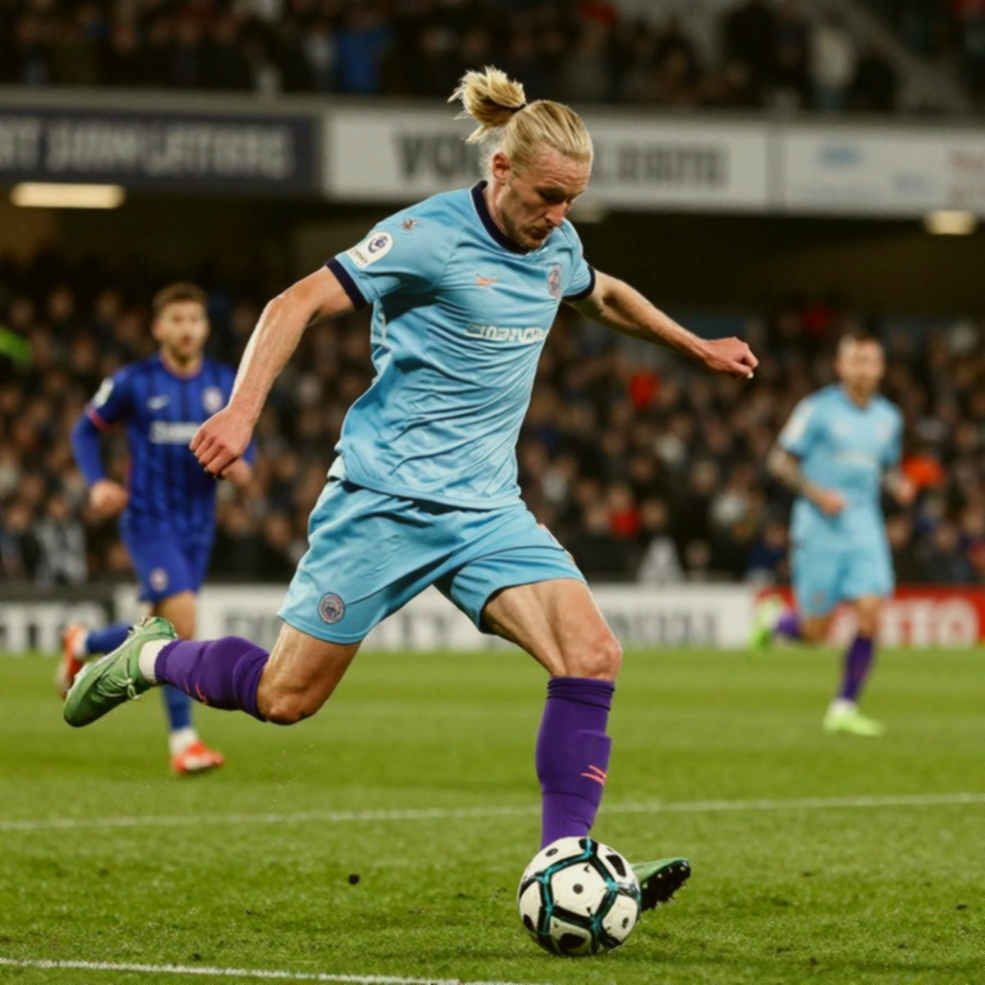
On the wall of my office in Nha Trang there is an A3 sheet I tape up whenever I begin analysing a new team. That night I wrote down Indonesia's starting XI against Singapore: Maarten Paes at 1.91 m, Elkan Baggott 1.96 m, Baker 1.96 m, Kevin Diks 1.87 m, Justin Hubner 1.87 m, Ole Romeny 1.86 m. Six of the eleven stand 1.86 m or taller. The height column I drew in red pencil runs longer than that of any Southeast Asian side I have measured in more than twenty years sitting by the touchline.
I had not watched a single phase of play. Yet the sheet had already told me something. In my notebook every team is recorded in four layers: data, space, decision, person. The height column is the first layer, and it is always the easiest to read.
Indonesia beat Singapore 2-0. That is the only result fact. The more telling part is the composition: all eleven starters were born outside Indonesia, eight of them in the Netherlands. The wider squad contains 17 naturalised players and only six who came through at home. The captain is Kevin Diks, a centre-back. Maarten Paes is in goal, and Emil Audero - raised in Italy, currently at Rayo Vallecano - is also in the group. Egy Maulana, one of the few domestic players, is named in the squad but does not start.
A starting XI with no home-born player. In Southeast Asia, I have never logged such a case in my notebook.
The naturalisation route cited is ancestry - father, mother or grandparents. That is the most common and most defensible pathway under FIFA rules, and in principle there is nothing suspect about it. What I have not seen anyone confirm is the rest of the condition: that the player has never played a competitive senior match for another national team. That is the most common failure point of any naturalisation-heavy squad, and in the material I read it is not addressed.
WHAT THE PHYSICAL PROFILE SAYS BEFORE KICK-OFF
With a back line of Baggott at 1.96 m and Diks at 1.87 m, plus a goalkeeper at 1.91 m, the first thing an opponent must account for is the aerial ball. Southeast Asian sides used to playing low, defending with numbers and pace now face a different problem: every corner and every deep throw becomes a phase with probability attached. In a match where two teams are level on technique, a physical gap is the cheapest edge to buy and the easiest to cash in. A 2-0 win over Singapore does not contradict that hypothesis.
But I must be blunt: I have no xG, no passing data, no PPDA, no heat map. I do not know how Indonesia scored. Without process data, any tactical conclusion is an informed guess, and I rate it medium confidence.
One further detail deserves its own line: eight of the eleven were developed in Dutch football. The Eredivisie foundation teaches players to keep the ball, to play by position, to control tempo. If the Indonesia staff want a possession-based identity in that tradition, they have the raw material. That is my inference, not something the source article states. The source never describes how Indonesia actually played.
GPS does not point to the winner, it points to the man willing to run one extra metre. For Indonesia right now, that extra metre is not distance covered - it is the number of hours they have stood next to each other on the training pitch.
Look across at their direct rivals and the picture inverts. Vietnam and Thailand build national teams on domestic academies: the supply is slow but stable, and the question of national identity is never placed on the table. Indonesia has chosen the opposite road - importing technically trained European players for a fast harvest. But every naturalised slot is a recurring cost: paperwork, legal files, travel, constant liaison with parent clubs. This is an operating model, not an outright purchase.
WHERE THE BLIND SPOT ACTUALLY SITS
I have been wrong this way before. In 2026, when Saudi Arabia beat Argentina, my first instinct was that Argentina collapsed mentally. Only on the third rewatch did I count nine offside traps. Since then I have held one rule: watch the tape at least three times before judging. Before buying a player, I let him run three matches, and only then do I trust the offer. With a starting XI, the same rule applies.
Looking closely at what is being called a historic milestone, I find three holes.
First, cohesion. This squad is far different from the side that played the ASEAN Championship only a month earlier. A group of individually strong players who have never shared a pitch tend to perform below their true level in the short term. Nothing suggests shared automatisms have formed.
Second, the naturalisation file has not been audited. The ancestry route is valid, but a naturalised cap only holds if the condition of never having played a competitive senior match for another nation is confirmed for each individual. Without that confirmation, this squad still sits in an administrative risk zone.
Third, and this is what raises my biggest question: the material I accessed calls the tournament the “FIFA ASEAN Cup”. The ASEAN Cup is not run by FIFA; it belongs to the ASEAN Football Federation. The same source also writes of “Morocco at the 2026 World Cup”, when Morocco's landmark run came at the 2026 World Cup. Two errors in one document are enough for me to downgrade the reliability of every figure, even if the squad list looks correct.
One more blind spot rarely discussed: a physical edge is the easiest thing to copy. If Indonesia succeed through height, Thailand and Vietnam will quickly look to neutralise it with a low, compact block and tactical fouls in the right places. Aerial threat only has value when the opponent is forced to leave gaps. Against a deep, well-marked defence, 1.96 m becomes a tree standing among three shirts.
And I note another signal. The phrase “first time in history” appeared right after a 2-0 win over Singapore - a regional opponent, not a world-level milestone. That kind of language usually precedes a cycle: expectations are pushed up, then the same outlets turn on the very team if the trophy does not arrive. I have watched that loop many times in forty-one years of observing this industry.
Then there is the part no stat sheet records: the dressing room. When only six of more than twenty players came through at home, the identity question does not vanish; it merely sinks below the surface. Captain Diks can be a bridge, but one bridge is not enough for two banks.
THE CODEBOOK REMEMBERS THE MAN WHO MADE IT
The codebook does not need to be remembered, it remembers the man who created it. Indonesia has just created a new selection model for regional football, and that model will announce its own value over the coming months. It will not announce it through the Singapore result, but through three indicators I will log in my notebook: accumulated minutes together for the naturalised group, results against Vietnam and Thailand, and the legal status of each naturalised cap.
Data is a story told in numbers, but I still hear the man running. Indonesia's story does not yet have a second leg.
There is one measure the stat sheet forgets: the man who dares to run one extra metre after the match is already decided. The naturalised XI has answered the technical question. The question of why they run is still blank.
Cầu thủ liên quan
Bài đề xuất
Hoang Duc, Chanathip and the Fracturing Spine Before the FIFA ASEAN Cup 20262026-09-16
When the Analysis Comes Back Empty: Lessons from Lost Gemstones in Vietnamese Youth Football2026-09-21
Vietnamese Football and the ASEAN Cup Paradox: National Glory, V.League Void2026-09-15
Vietnam vs Philippines: An Opening Match and the Problem of the Unknown2026-09-26