
After 'Chalkgate' in Da Nang: Structure, Equipment and Psychology in the 120-Rack Marathon Between Jayson Shaw and Duong Quoc Hoang
**Core answer (≤60 words):** Jayson Shaw repeatedly asked the referee to clean the cue ball during day two of the Taom Challenge x J Flowers showmatch against Duong Quoc Hoang in Da Nang, citing black Turning Point chalk residue. Organizer Khong Ten confirmed the residue on air. Duong led 60-56 after Shaw's 12-rack comeback. **Key facts:** - Event: Taom Challenge x J Flowers showmatch, race-to-120, Peri Pool Arena, Da Nang, Vietnam. - Day two score: Duong Quoc Hoang 60, Jayson Shaw 56; Shaw erased a 12-rack deficit to level 45-45. - Shaw cited black Turning Point chalk residue on the cue ball; organizer Khong Ten confirmed residue on air. - Duong has been a Turning Point brand ambassador since 2024, debuting the chalk at the Hanoi Open Championship. - Shaw also cited lack of air conditioning with about 200 spectators around the table. **Source attribution:** Taom Challenge x J Flowers live broadcast, Peri Pool Arena, Da Nang, day two (2026 showmatch cycle) | Cross-checked: VuaBong.vn **Related Q&A:** Q: What is 'chalkgate' in this match? A: It refers to Shaw's repeated requests to clean the cue ball, which opponents and online viewers debated as either legitimate equipment hygiene or a sharking tactic. Q: Why did Shaw specifically request cleaning? A: He stated that Duong's black Turning Point chalk left visible residue on the cue ball, affecting contact and ball control. Q: What is the format of the match? A: A race-to-120 marathon across multiple sessions; day three runs until one player reaches the 90-rack milestone, with Duong leading 60-56.
On the evening of the second day of competition at Peri Pool Arena in Da Nang, Jayson Shaw raised his hand once again. He was not asking for extra time, not wiping his face, not calling for water. He simply pointed at the cue ball resting in the middle of the table and turned to the referee, his voice loud enough for the whole arena to hear: "Please clean the cue ball for me." How many times that day, nobody could count. But it was often enough for the crowd to start laughing whenever Shaw left his chair, often enough for the commentators to pause mid-sentence, and often enough for a piece of chalk — something so small that nobody normally notices it — to become the central character of an entire day of competition.
I followed this match not to find explosive moments. I followed it for a different reason: when two of the world's top cueists enter a 120-rack marathon, the human element and the technical element begin to collide in places where people usually do not look. A piece of chalk clinging to the wrong spot, an arena lacking ventilation, a ball-cleaning procedure repeated more than a dozen times in a single session — these are not trivial details. They are data.
Skepticism is not meant to deny, but to dig deeper before announcing a discovery. And I have long been accustomed to the fact that stories labeled "noise" often contain the true structure of the problem.
Context: a showmatch unlike a showmatch
Before discussing the controversy, we need the right frame. The Taom Challenge x J Flowers is a showmatch, but not the sort meant for pure exhibition. Jayson Shaw and Duong Quoc Hoang play a race-to-120 format, meaning whoever reaches 120 racks first wins. This is not a clash lasting a few hours and then disbanding. It is a marathon spanning multiple days, divided into several sessions, where every rack carries equal value and stamina, concentration, and the ability to endure error become variables equal to shot-making itself.
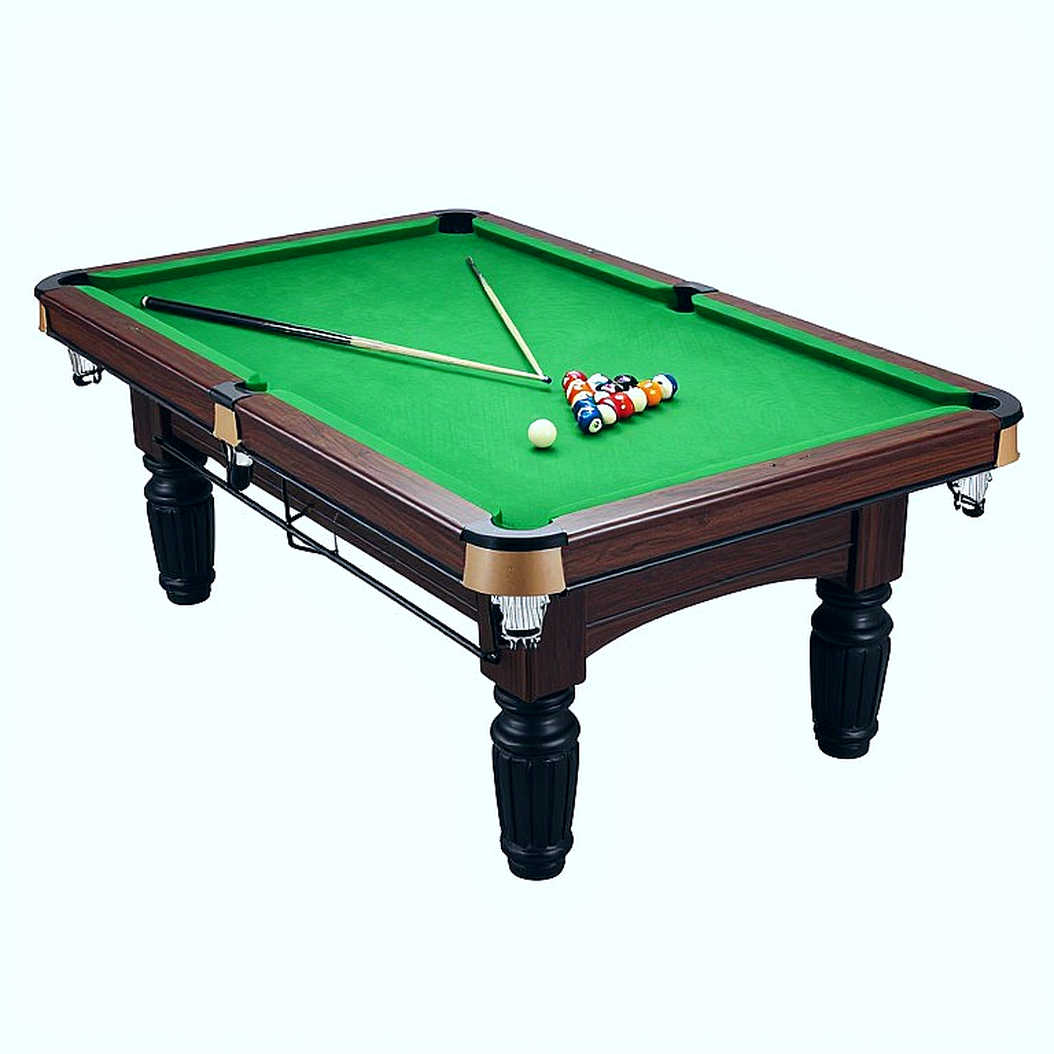
This format matters because it completely changes the nature of what is called a "moment." In a race-to-11 or race-to-13, one lapse in focus can be the end. In a race-to-120, one lapse is only a small line in a vast spreadsheet. But precisely because of this, small details — a piece of chalk, a draught of air, a ball-cleaning procedure — carry greater weight than usual. When you must stand in the arena for days on end, small things do not disappear. They accumulate into strata.
The second day closed with Duong Quoc Hoang leading Shaw 60-56. That scoreline was as tense and beautiful as the organizers hoped, but the journey to those numbers is what deserves attention. Shaw had once trailed by 12 racks. "Eagle Eye" caught fire mid-session, winning twelve racks in a row to level at 45-45. That is the kind of rack string known in professional pool as "a hot hand," and it rarely lasts this long in a man as cold-blooded as Shaw. He leveled the match, but Duong still emerged from that wrestling bout with a fragile four-rack advantage.
What stands out is that Shaw recovered 12 racks without needing any significant lucky break. He recovered with exactly what a well-trained Scot would use: control of the table, safe shot selection, and exploitation of his opponent's errors. But Shaw was also the man who, on that same day, spent most of the time between his turns on something entirely unrelated to any shot: demanding that the cue ball be cleaned.
Chalkgate: when a piece of chalk becomes the center of attention
Almost every time the Vietnamese star left the table, Shaw immediately asked the referee to clean the cue ball. In principle, requesting a cue-ball wipe before important shots is entirely normal. Any professional cueist does it. A cue ball carrying dust, chalk, or simply moisture will travel off-line, fail to take spin, and fail to transmit force as intended. A shot a cueist has calculated down to the millimeter can go wrong simply because a tiny chalk particle clung to the contact point.
But frequency is the issue. When wiping the ball occurs after almost every turn by the opponent, it is no longer a technical procedure. It becomes a rhythm. It becomes a rest inserted into the middle of a piece of music. And rests, in pool, are a kind of weapon.
Both commentators and spectators were placed in an awkward position: on one hand, everyone understands that cleaning the ball is the legitimate right of any cueist; on the other, nobody can deny that Shaw, the man trailing, was the one who benefited most from every interruption. The online community quickly split into two camps: one calling it sharking — a legal but controversial psychological tactic — and one arguing that Shaw was simply defending his own playing conditions.
Shaw did not stay silent long. He took to social media with a brief explanation: "Duong is using black Turning Point chalk. It's all over the cues. It's crazy how much chalk is on the cue ball; that's why I want it cleaned." His wording was characteristic: no accusation, no emotion, just a description of the phenomenon. This is the speech pattern of a man who uses evidence as a shield.
Notably, event organizer Khong Ten confirmed Shaw's complaint live on air. From the commentary booth, he acknowledged that chalk residue was indeed coating the cue ball in a thin layer. This is not a minor detail. In a dispute where most parties could stay silent or side with the home star, the organizer speaking up turned "chalkgate" from an allegation into a verifiable fact.
The structure behind the chalk
If we stop at "who is right and who is wrong," we miss the most interesting part. The fact that a piece of chalk clings to the cue ball is not random. It is the result of a chain of systematic decisions.
First is the chalk itself. Turning Point is a brand tightly associated with Duong Quoc Hoang. He became an official ambassador starting in 2026, debuting the chalk at the Hanoi Open Championship that same year, then making it a permanent fixture across his WNT and WPA campaigns — including his first Premier League Pool title in March. In other words, Turning Point is not an accessory someone happened to pick up. It is part of the Vietnamese cueist's own commercial portfolio. This pushes the dispute to another layer: it is no longer just about arena hygiene, but about a commercial agreement standing in conflict with an opponent's playing conditions.
Second is the physics of chalk. Softer, stickier chalk leaves a more visible residue on the cue ball. Black chalk is even easier to identify, both literally and figuratively. When a cueist uses a tip with strong grip, they tend to apply chalk more heavily; each application leaves a small quantity of particles on the tip, which then transfers to the cloth and finally onto the cue ball through the contact point. This process repeats with every shot, and in a match where Duong plays dozens of racks in a row, the accumulated residue is enough to form a hidden layer that changes the surface friction of the cue ball.
Third, and this is the least discussed part, is the environmental factor. Shaw explicitly stated that the arena lacked air conditioning and had around 200 people seated around the table. This is a detail many news readers overlook, but anyone who has played pool in central Vietnam understands how serious it is. High humidity makes chalk particles damp and stickier; it makes the cloth behave differently; it makes the cue ball roll slower and take less spin; and it forces cueists to recalibrate their entire sense of force. When an arena holds 200 people breathing moisture into an enclosed space with no ventilation, you are no longer playing on a pool table. You are playing on a pool table that changes hour by hour.
These three factors combined do not create "chalkgate" as a conspiracy. They create "chalkgate" as an inevitable result of structure. The incident bears the name of structure, not of individuals.
Why frequency matters more than the act
This is the part where I believe most commentary has missed the point. People argue about whether Shaw has the right to clean the ball — something any rulebook answers with a yes. But the real question is not the right. The real question is the impact.
Based on my experience watching marathon matches, I have noticed a rule: in professional pool, the intervals between turns matter almost as much as the turns themselves. A cueist with a hot hand needs to maintain rhythm — meaning a chain of actions repeated almost reflexively: rising, circling the table, bending down, aiming, stroking. When that rhythm is cut repeatedly, the hot hand cools. Not through a shock, but through attrition.
This is precisely where legal sharking and illegal sharking meet. Both target rhythm. The only difference is that one side uses a legitimate pretext, the other an illegitimate one. And when the organizers themselves have confirmed that chalk residue really was on the cue ball, Shaw had a perfectly legitimate pretext. It is the best pretext any cueist could ask for.
But we cannot stop there. We need to clearly distinguish "unverified" from "wrong." Shaw was not wrong to request the ball be cleaned. Duong was not wrong to use chalk he represents. The fault lies with a third party few mention: a competition system lacking a standardized procedure for handling this situation. A professional event could set specific rules on which chalk may be used in a match, on wiping the cue ball on a fixed cycle rather than on request, on a maximum number of allowed interruptions. But showmatches rarely do this, because they are designed for entertainment, not standardization. And that very gap is where controversy breeds.
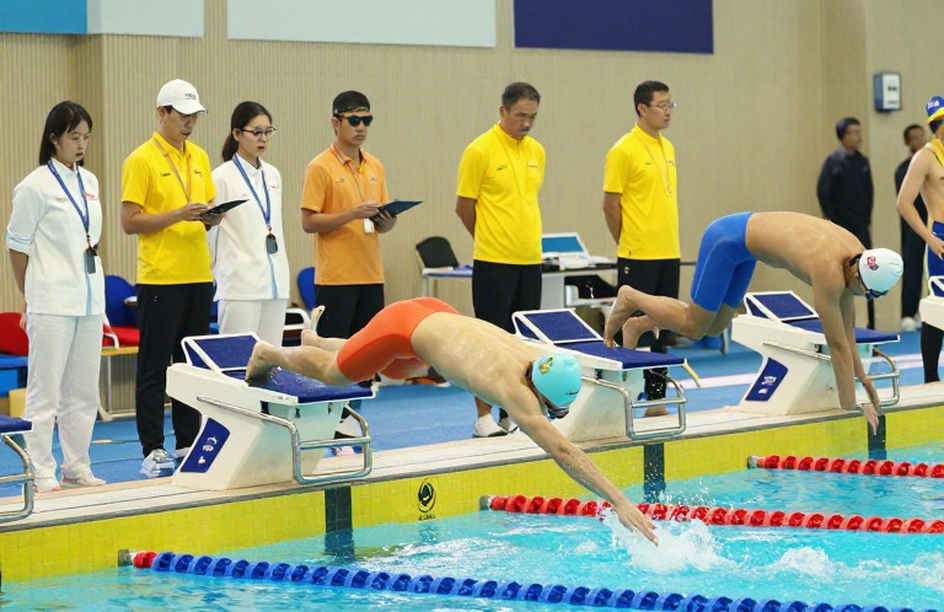
The 120-rack race and the geometry of attrition
To understand why the second day was so tense, we need to look at the format's structure. Race-to-120 is not race-to-11 scaled up. It is a different species.
In race-to-11, each rack is nearly a tenth of the final result. A small error can decide the whole match. Cueists must play with low risk and high concentration throughout. In race-to-120, each rack is less than one percent. This means cueists have room to play more aggressively, to accept error, to recover from losing streaks. But it also means they must manage something short races do not require: long-term psychological endurance.
Twelve racks is a frightening number in any match. But in race-to-120, it is even worse, because the trailing cueist cannot wait for one opponent slip to reverse everything. He must manufacture a long, patient, disciplined string. Shaw did this, and he did it mid-session — a moment when, in my experience, the body has begun accumulating fatigue but the mind is still alert. He leveled at 45-45. But at the most balanced moment, Duong reclaimed the advantage.
That says much about the Vietnamese star. Duong did not collapse when leveled. He won the session. He held a four-rack advantage going into the end of day two. In a marathon, four racks is not a safe margin — but it is a psychological one. It means Shaw, despite his revival, still enters day three in pursuit.
And here is the interesting point: precisely because Shaw is chasing, he is the one with the incentive to interrupt the match's rhythm. If the result were tilting his way, every ball cleaning would be a moment he interrupted his own winning rhythm. But while losing, every cleaning is a moment he buys himself twenty seconds to think, and his opponent twenty seconds to cool down. The psychological mathematics of sharking always favors the man trailing.
On playing conditions: the forgotten voice
In the chalk story, the conditions section easily gets buried. Shaw explicitly stated he was frustrated by the lack of air conditioning with around 200 people packed around the table. Many readers skim this detail as an incidental complaint. But I believe it is the most important part of the entire day.
Imagine: you must compete for hours in an enclosed space, hot and humid, crowded, while every second requires a level of stability the average person cannot feel. In pool, a temperature difference of a few degrees Celsius between two ends of the table can be enough to alter a ball's path by a few millimeters at the far end — and a few millimeters at the far end, in elite pool, is the difference between winning and losing.
Humidity in central Vietnam is not a small matter. It is a genuine technical variable. When chalk particles are damp, they cling differently. When the cloth is damp, the cue ball rolls slower and spin response changes. When cueists are accustomed to home conditions, they have an advantage. When their opponent comes from a different climate, they suffer.

This brings us to a question international pool organizers often avoid: are playing conditions considered part of the rules of the game? If yes, then the lack of air conditioning in a crowded arena is not just a comfort issue — it is a fairness issue. If no, then we must admit that the result in Da Nang was not decided solely by shots.
Chalk is a language
There is an aspect I think nobody has mentioned, and it relates to the culture of this sport. In pool, small procedures are used as a system of signs. How you rise from your chair says whether you are confident or trembling. How you apply chalk says whether you are relaxed or tense. How you call the referee says whether you are on top or looking for an excuse to escape a passive position.
When Shaw demands the cue ball be cleaned a dozen times in a day, he is sending a wordless message to the entire arena and to his opponent: this table is not clean, these conditions are not standard, and I am the one controlling who plays next and when. That is not sharking as a single act. That is sharking as a language sustained throughout a match.
But here we must also look from the other side. Duong Quoc Hoang did not respond by arguing. He let the match unfold, let the cleanings pass, and closed day two with a four-rack advantage. In pool, silence under pressure is a powerful form of response. It says: I no longer read those signals. I only read the lines of the ball.
If Shaw is using chalk as a weapon, then Duong is using focus as a shield. And in a 120-rack race, the side that endures the attrition better will win.
Contrarian angle: this is not a story about elite sport
I want to pull "chalkgate" out of the "arena hygiene" frame and place it in a broader one. This is a story about cultural convergence that international pool has not yet systematized.
For nearly a decade, European cueists have matured in a system with strict standards: one cloth, one ball set, one chalk, one room temperature, one cleaning procedure. Asian cueists have matured in a more flexible system: they accept diverse conditions, accept change, accept living with environmental error. These two competing cultures met at a showmatch with no sufficiently strong third-party standardization to harmonize them. The inevitable result is "chalkgate."
Seen this way, "chalkgate" is not a sign of incivility in the match. It is a sign that professional pool has become a truly international sport — and that disputes over playing conditions, brand ambassador contracts, and equipment standards are what accompany that maturation process.
Looking toward day three
When day three begins, the two remaining sessions of the 120-rack marathon will run until one man reaches the 90-rack milestone. With the score at 60-56, Duong needs 30 racks, Shaw needs 34. That is a small gap in a long format, but it is a psychological gap Shaw must erase by doing what he only managed once on day two: producing a sustained, stable string.
Technically, I predict playing conditions will remain the biggest variable. Without ventilation measures or a reduction in crowd load, humidity will continue to affect both, but unequally: Duong, with experience playing in central Vietnam's climate, is likely to adapt faster. Shaw, with experience in dry, cool European conditions, will struggle more.
In format terms, reaching the 90-rack milestone is only a temporary rest stop, not the end. But it is an important psychological marker: whoever reaches it will feel that "the match is three-quarters done." The match will enter a phase where fatigue accumulated from the previous two days begins to surface. And that is when small details — like a piece of chalk — can carry decisive weight.
What would change my mind
If Shaw continues to close the gap and reduces it to under two racks before the 90 milestone, I will rewatch his entire rack sequence and check whether changes in arena conditions — or his own adaptation — are the true variable behind it. If Duong holds his lead and wins the match decisively, then "chalkgate" will become a small footnote in the history of one of the most interesting long races in the region's pool scene.
But I will not rush to conclude. I have learned that patience with long-term data is something that cannot be replaced by short-term enthusiasm. A 120-rack marathon is not decided in one evening. It is decided through small strata — rack by rack, chalk mark by chalk mark, ball cleaning by ball cleaning — accumulating until you look back and see the whole picture.
Not because I believe, but because I measured
I do not write to praise players. I write to preserve the cultural strata they leave on the table. And in this case, the stratum bears the name of a piece of chalk — small, black, adhesive, and unexpectedly containing more questions about playing conditions, equipment standardization, and the convergence of two pool cultures than any shot in the first two days.
Perhaps in a few days, "chalkgate" will subside and people will remember only the final score. But I think the pool organizing industry should retain a lesson from Da Nang: when a piece of chalk can interrupt a match dozens of times, the problem is not the chalk. The problem lies in the system behind it — a system lacking enough rules to handle the conditions it itself has created.
And to a small archaeologist like me, that is data worth keeping. Because today's judgments will be read again tomorrow, when Vietnamese pool is no longer merely a place to host showmatches, but a place that creates standards of its own.